

In three weeks, many of the government subsidies that help people afford health insurance will expire. If the subsidies are not extended before the end of the year, the impacts will be cataclysmic.
The 22 million Americans who currently receive these subsidies will see their premiums increase by an average of 114%. According to an analysis by the Urban Institute, families with incomes below 250% of the poverty line will pay premiums that are more than four times higher — rising from $169 to $919.
Meanwhile, an estimated 4.8 million people will lose coverage completely because they are priced out of the market. Uninsured people, of course, continue to get sick and require emergency medical care. The Robert Wood Johnson Foundation projects “a $7.7 billion spike in uncompensated care in 2026” if the subsidies expire.
The impact will be most severe in large Republican-leaning states that have not expanded Medicaid, including Florida and Texas, because they rely on the Obamacare marketplace to cover many of their low-income residents. Those states will see their uncompensated care costs rise by as much as 25%.
A study by the Commonwealth Fund also estimates that failing to extend the subsidies will result in the loss of 339,100 jobs due to reduced health care spending.
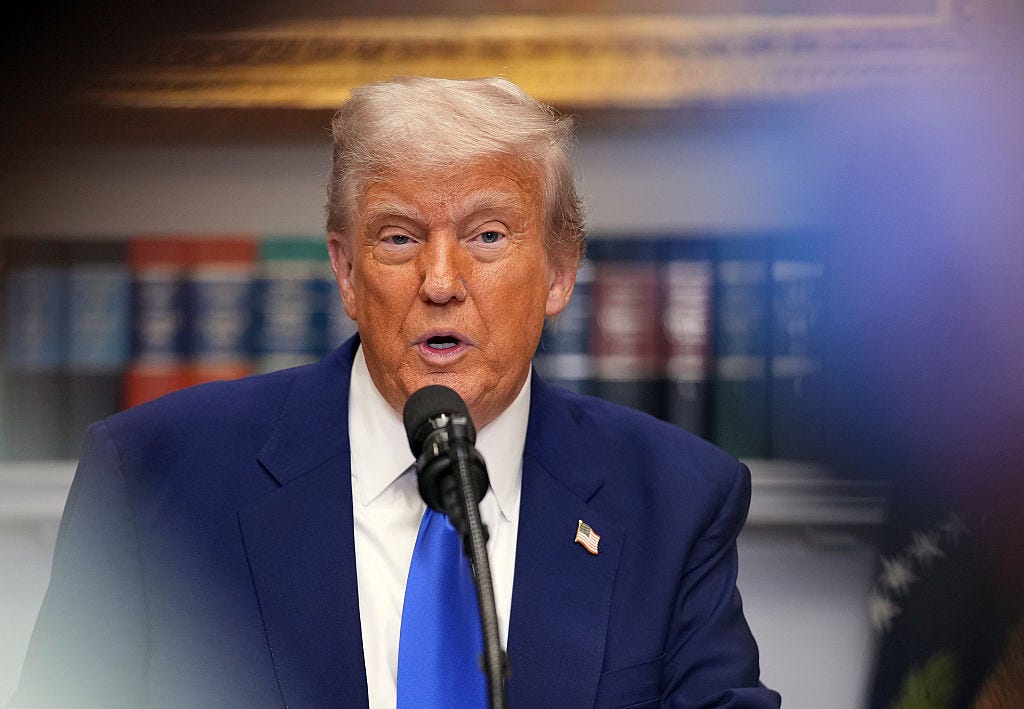
In an interview with Politico published on Tuesday, President Trump was asked if he planned to let the subsidies expire. This was his response:
I want to give the money to the people to buy their own health care. That’s a good thing, not a bad thing. The Democrats don’t want to do that. They want the insurance companies to continue to make a fortune. The Democrats are owned by the insurance companies. They want the insurance companies to get these trillions of dollars. We spent ... we spend trillions of dollars [that] goes to the insurance companies. I want that money to go to the people and let the people go out and buy their own health care. It works like magic. But you know who doesn’t want it? The Democrats, because they’re corrupt people because they’re totally owned and bought by the insurance companies.
Trump makes a compelling case that the private insurance industry has excessive profits. But the core of his argument makes no sense.
If you give Americans money to “buy their own health care,” they will have to use those funds to buy insurance from insurance companies. Later in the interview, Trump says, “The people will get the money and they’re gonna buy the health insurance that they want.”
Trump’s plan is not “magic.” It will not divert money from the insurance industry. But, if enacted, it could destroy Obamacare — a longtime goal of the Republican Party.
“Death spiral and ultimate collapse”
While Trump claims that he will be giving money back to “the people,” his plan will actually lead to “a premium death spiral“ and the “ultimate collapse” of Obamacare, according to Larry Levitt, KFF’s vice president for health policy.
What experts believe will happen under Trump’s plan is that healthier people will buy much cheaper plans that are not ACA-compliant. In order to be on the ACA marketplace, insurance plans must cover things like maternal care and pre-existing conditions. With less comprehensive coverage, healthier people will pay less month to month, but could face exorbitant medical bills if their health worsens.
When the healthiest people leave, the people still in the ACA marketplace will be sicker on average and need more care, meaning providers will increase premiums. Eventually, even some people who need more robust coverage will be unable to afford the higher premiums, dropping their ACA coverage and leaving only the very sickest. This cycle will continue until the remaining people in the pool are so sick, no insurer is willing to offer them coverage.
Ultimately, this will destroy Obamacare and make finding a health insurance plan incredibly difficult.
Trump and other Republicans who support this plan argue that giving Americans funds to choose their own health insurance plans will lead to a more transparent system with more consumer choice. However, this assumes that the health insurance market, absent a regulated exchange, makes it easy for Americans to identify and compare plans.
In reality, the health insurance market is very opaque — an issue Obamacare was created to help mitigate — and it can be difficult to ascertain the costs and benefits of any plan. As one health insurance policy expert, Mona Shah, told CNN, “The reality is even if that [price] information is accessible, how many people could navigate that, understand the differences, have the time to do that and then make informed decisions?”
The doomed vote
While Republicans have floated multiple health care proposals to address the expiring subsidies, they have struggled to coalesce behind one plan.
On Tuesday, Senate Majority Leader John Thune (R-SD) announced that the Senate would vote Thursday on a proposal by Senator Mike Crapo (R-ID) and Senator Bill Cassidy (R-LA), known as the Health Care Freedom for Patients Act. “In line with President Trump’s call, Republicans propose redirecting money going to insurance companies back to patients,” a summary of the proposal reads.
Crapo and Cassidy’s plan would allow the subsidies to expire and instead provide funds directly to health savings accounts — but only to people who purchase bronze and catastrophic plans, the worst coverage available. Under the plan, eligible enrollees aged 18 to 49 “earning less than 700 percent of the federal poverty level would receive $1,000” in 2026 and 2027, while those aged 50 to 64 would receive $1,500. The plan also includes restrictions on abortion coverage and gender transition services.
Thune said that the proposal “delivers the benefit directly to the patient, not to the insurance company.” But, in reality, the proposal does this by dramatically increasing the costs to patients first. Catastrophic coverage plans offer very high deductibles that are “equal to the annual limit on out-of-pocket costs under the ACA,” which will be $10,600 for an individual in 2026. Catastrophic coverage is currently only available to people under 30 with few exceptions, although the bill would expand eligibility. Bronze plans offer only slightly more robust coverage.
It is unlikely that Senate Republicans will have the votes to pass Crapo and Cassidy’s proposal. On Tuesday, Thune said he “can’t say 100%,” but that he thinks Senate Republicans are “united” around the proposal. Senate Minority Leader Chuck Schumer (D-NY) called the bill “dead on arrival.” House Speaker Mike Johnson (R-LA) has said that House leaders also plan to introduce a health care plan this week, although the details are sketchy.
One likely outcome is that Republicans do not pass any legislation ahead of the subsidies expiring and costs dramatically increase for millions of Americans starting in the new year.
Tired of the incompetence of the Senate? Republican Senators not doing enough to help you? 20 Republican Senators are up for re-election in 2026.
Vote. Make a difference.
Thank you for this reminder, Judd. This is suicidal legislation.