

In the past, social media platforms were viewed as engines of social change, empowering everyday citizens to band together against repressive governments. In 2009, during the Green Movement, millions of Iranian protesters relied on Twitter to coordinate gatherings and circumvent government media blackouts.
Social media, it seemed, was an effective tool that ordinary citizens could use to counteract the excesses of the powerful.
Times have changed.
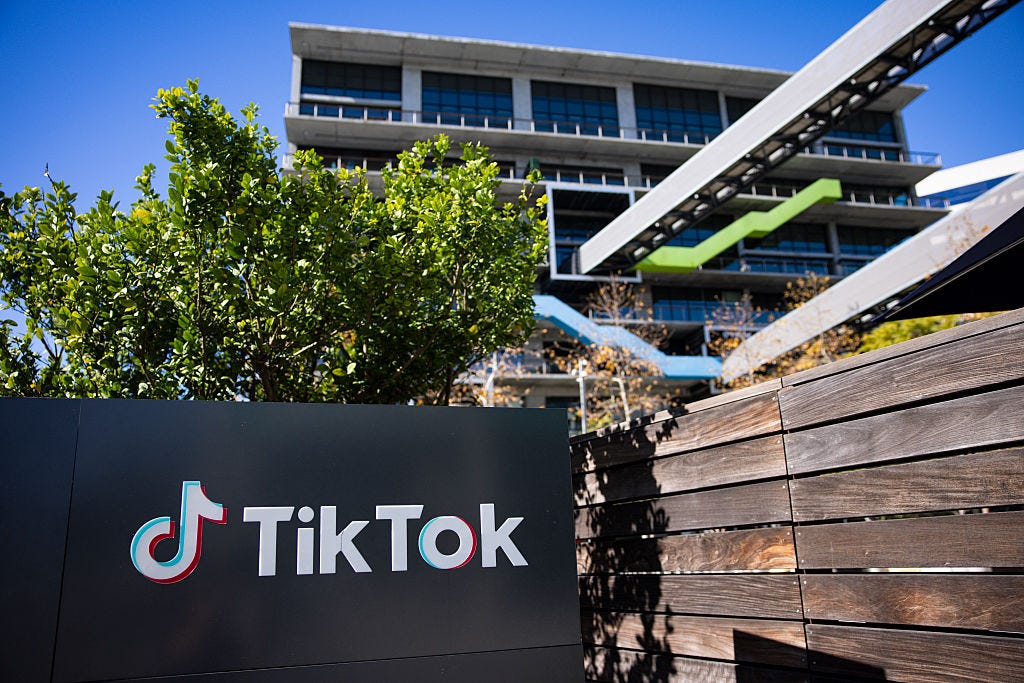
In the wake of a violent immigration crackdown in Minneapolis that left two American citizens dead, TikTok users reported they were unable to upload videos critical of U.S. Immigration and Customs Enforcement (ICE). On Sunday, law professor Stephen Vladeck reported that he “recorded a video on TikTok about why DHS’s arguments for the power to enter homes without judicial warrants in immigration cases are bunk.” However, after nine hours, the video was still “under review” and could not be shared.

Other prominent figures, including comedian Megan Stalter and California State Sen. Scott Wiener (D), also said they were unable to upload anti-ICE videos or that such videos appeared suppressed by the TikTok algorithm.
The controversy emerged days after TikTok’s United States operations were acquired by a consortium led by Oracle, which was co-founded by billionaire and Trump loyalist Larry Ellison. Politico reported the acquisition “puts President Donald Trump’s allies in charge of yet another driver of American culture.”
TikTok insists this is all a big misunderstanding. It attributed the problems some users had uploading videos to an outage at a U.S. data center. But the timing has raised concerns, and other issues, including the inability of some users to send direct messages that included the word “Epstein,” have not been explained.
California Governor Gavin Newsom (D) said he would launch an investigation to determine whether TikTok’s explanation is credible. Regardless of the outcome, the larger trend is unmistakable. During Trump’s second term, large technology companies have served as an arm of the state, undermining protest and dissent.
Apple and Google ban ICE-related apps
During the second Trump administration, both Apple and Google have removed apps from their app stores that track sightings of federal agents after facing pressure from the Department of Justice (DOJ).
ICEBlock, for example, allows users to anonymously report sightings of ICE officers and notifies users if agents are reported within a 5-mile radius. The app does not allow for photographs or videos of officers and the alerts expire after four hours. The app also notifies users that it is “for information and notification purposes only,” and that “[i]t is not to be used for the purposes of inciting violence or interfering with law enforcement.”
In October, Apple removed ICEBlock from its app store in response to a request by Attorney General Pam Bondi. “We reached out to Apple today demanding they remove the ICEBlock app from their App Store — and Apple did so,” Bondi told Fox News. Bondi argued that the app was “designed to put ICE agents at risk just for doing their jobs, and violence against law enforcement is an intolerable red line that cannot be crossed.”
ICEBlock developer Joshua Aaron told CNBC that the app “went through a heavy review process with both Apple’s legal and senior officials in App review” when it was first submitted to its app store. Nevertheless, Apple told Aaron in an email that ICEBlock did not meet app store guidelines around “objectionable” and “defamatory, discriminatory, or mean-spirited content,” CNN reported. In a statement, Apple said that, “Based on information we’ve received from law enforcement about the safety risks associated with ICEBlock, we have removed it.” In December, Aaron sued top Trump administration officials, arguing that they pressured Apple to violate his First Amendment rights.
Apple also removed other apps that allow users to track ICE from its store. Shortly after, Google followed suit. (ICEBlock never appeared in the Google app store.) Among the removed apps were Red Dot and Eyes Up. Red Dot, which was removed by both companies, allows users to report ICE activity and notify nearby community members. Eyes Up, which was removed by Apple, was designed to “document and preserve evidence of abuses of power by law enforcement” that could later be used in legal cases. The app “only archives publicly posted materials,” including social media posts, news articles, and videos, but does not offer real-time tracking.
Meta deletes ICE group, blocks ICE-related websites
Meta has established a pattern of censoring information related to ICE officers and operations.
In October, when ICE was in the midst of an operation in Chicago, Facebook users created a group, “ICE Sightings-Chicagoland,” to post photos and other information about where ICE officers had been seen. On October 14, when the group had reached over 80,000 members, it was taken down.
According to Bondi, Meta removed the ICE group at the DOJ’s behest. Bondi claimed in a social media post that the group was being used to “dox and target” ICE agents.
“The wave of violence against ICE has been driven by online apps and social media campaigns designed to put ICE officers at risk just for doing their jobs,” Bondi wrote on X. “The Department of Justice will continue engaging tech companies to eliminate platforms where radicals can incite imminent violence against federal law enforcement.”
Similar Facebook groups exist for other cities targeted by ICE operations, like Portland, but have not yet been taken down by Meta.
This week, Meta began blocking links to a popular website called ICE List. The site compiles information on Department of Homeland Security employees in order to “document federal immigration enforcement, preserve evidence, and maintain a public record for accountability.”
Links to ICE List that have already been posted now display an error message when clicked on, and users attempting to make new posts linking to ICE List are blocked from doing so. According to ICE List’s creator, Dominick Skinner, ICE List has been asking for tips on DHS employees and posting links to its site on Meta platforms like Facebook, Instagram, and Threads for six months without issue.
In an interview with WIRED, Skinner said, “I think it’s no surprise that a company run by a man who sat behind Trump at his inauguration, and donated to the destruction of the White House, has taken a stance that helps ICE agents retain anonymity.”
Meta denied that it was blocking ICE List links in order to appease the Trump administration, saying instead that the site violated its policy on sharing personally identifiable information. However, WIRED found that much of ICE List’s information on DHS employees was originally shared by employees themselves on public platforms such as LinkedIn.
This is how techno-fascism actually works: Ellison buys TikTok, Zuckerberg deletes ICE tracking groups, Apple and Google remove resistance apps on DOJ command.
Not state control of tech…tech As the state.
Iran shut down the internet during their massacre.
America just outsourced censorship to billionaires who sat behind Trump at inauguration.
The infrastructure isn’t just ICE agents…it’s Palantir tracking deportation targets, Meta blocking evidence preservation, Apple preventing community defense. Silicon Valley isn’t resisting authoritarianism. They’re building the digital architecture that makes it scalable.
Argentina’s dictatorship needed physical files and informants. This regime has real-time geolocation, facial recognition, and social media companies that delete 80,000-person organizing groups at Bondi’s request.
When protesters can’t coordinate, can’t warn each other, can’t document abuses, can’t preserve evidence, the paramilitary force operates in darkness. That’s not a bug. That’s the business model.
Money and power over ethics—-as if we didn’t know that was their raison d’être all along.
—Johan
Yeah, if anyone is still holding onto the idea of the tech sphere as a bastion of liberalism, they should quickly dispel that notion. Silicon Valley isn't our ally.